

How To Repair A John Deere Plastic Hood
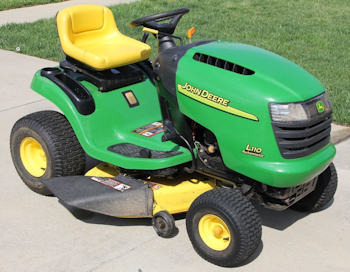 John Deere hoods frequently get cracks in them. When they practise, we get phone calls. "How do I fix my John Deere lawn tractor hood?" they ask. "It's made of 'plastic'." they say. The "plastic" from which *almost* John Deere lawn tractors are fabricated is polycarbonate. This is a very rigid plastic and, when it gets cold, information technology gets breakable and breaks easily. With all of the vibrations from the mower, not to mention the bumps that the mower has to suffer, it's no wonder they suspension. Not just that, but when you plow off the mower, all of that heat from the engine tends to "cook" the plastic making it even more brittle.
This polycarbonate plastic was used for years back in the ninety's on Ford, Mercedes, and Hyundai bumper covers. The car manufacturers don't use polycarbonate anymore for several reasons. When a polycarbonate bumper gets in a collision (particularly in freezing weather), the bumper would shatter and not blot much of the touch on. Of course, the chief reason the manufacturers don't use polycarbonate for bumper covers anymore is considering polycarbonate is more expensive and heavier than, say, polypropylene (which is what they utilize now).
Polycarbonate can exist hands repaired. We did it, and body shops did information technology for years. We still do it occasionally.
We had someone local bring us a John Deere backyard tractor hood that was cracked in several places. He used packing record to hold it together. Of course, information technology didn't hold very well or he wouldn't have brought it to the states! He said he wasn't also concerned about the appearance. He just wanted information technology repaired. That made this job much easier.
Since we become and so many calls about repairing John Deere lawn tractor hoods, nosotros thought we would do the globe a favor and show you, pace-by-step, how to repair them.
Step-By-Pace Instructions
Pace 1
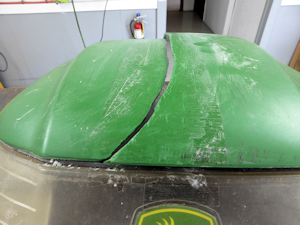
Equally yous tin can see, this John Deere backyard tractor hood was croaky all the style downwardly the length of the hood. The program is to remove the tape residue, align the crack, and tape it together temporarily, then weld the backside.
Pace ii
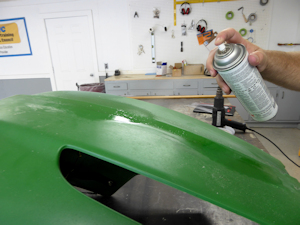
Nosotros need to become that tape remainder off. Information technology doesn't come up off with soap and water, so you'll demand to go some Super Prep Plastic Cleaner. It has some mild solvents and alcohol in it that will emulsify the tape residue without attacking the plastic. Wipe it off with a make clean paper towel in one direction. If you need to clean information technology some more than, be certain to expose a clean role of the paper towel. Otherwise, you are only spreading the goo around.
Step 3
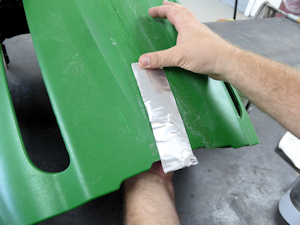
To hold the damage in alignment while repairing, nosotros used some Aluminum Tape. This aluminum tape is really thick and more rigid than that stuff you go at abode comeback stores. Not simply that, but it is super gummy.
Step 4
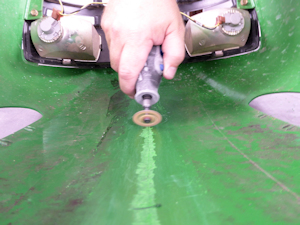
Polycarbonate tends to get crusty and oxidized over time. The rut radiating from the engine oxidizes it quicker. Your welding rod will not melt together with the chaff, so you need to get rid of the crusty surface. To get the all-time weld, you need to weld to un-oxidized plastic. Nosotros used a rotary tool with with a carbide cutting bike to remove this crusty, oxidized surface.

Stride v
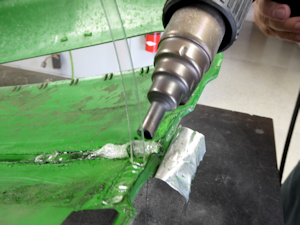
We used the polycarbonate strips to weld along the crevice line. This will requite a stronger repair than using the 1/8" inch (3 mm) rods.
Step 6
To further strengthen the repair, and to assistance preclude it from re-breaking, we welded a "T" at the end. Cracked plastics normally re-break at the edge, so by "T'ing" off the repair at the edge, you lot volition reduce the chance of a re-pause.

Step seven
Later the weld cools off, it is safe to remove the aluminum tape from the other side. After peeling of the tape, we noticed that the repair was really strong. We had originally planned on welding along the crack line with the 1/8" inch (3 mm) rods, but that would have been ugly, and John Deere owners seem to exist actually proud of their green machines. Even though the owner *said* appearance wasn't important, we decided NOT to weld the visible side in the interest of appearance.
Pace viii
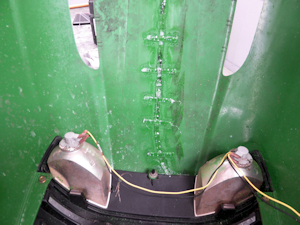
We "T'd" off the repair at the border to strengthen that spot (since that is normally where re-breaks occur). Since we didn't weld the visible side, we decided to "T" information technology off in several locations on the behind to compensate for non welding the visible side.
Finished
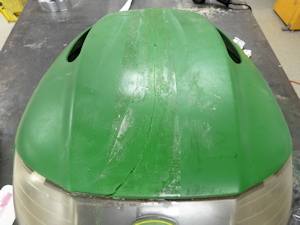
Hither is a picture of the completed repair, and information technology is VERY strong. Not pretty, but stiff.
welding john deere tractor hoods

How To Repair A John Deere Plastic Hood,
Source: https://www.polyvance.com/John-Deere-Lawn-Tractor-Hood-Repair/
Posted by: grayroyes1945.blogspot.com
0 Response to "How To Repair A John Deere Plastic Hood"
Post a Comment